
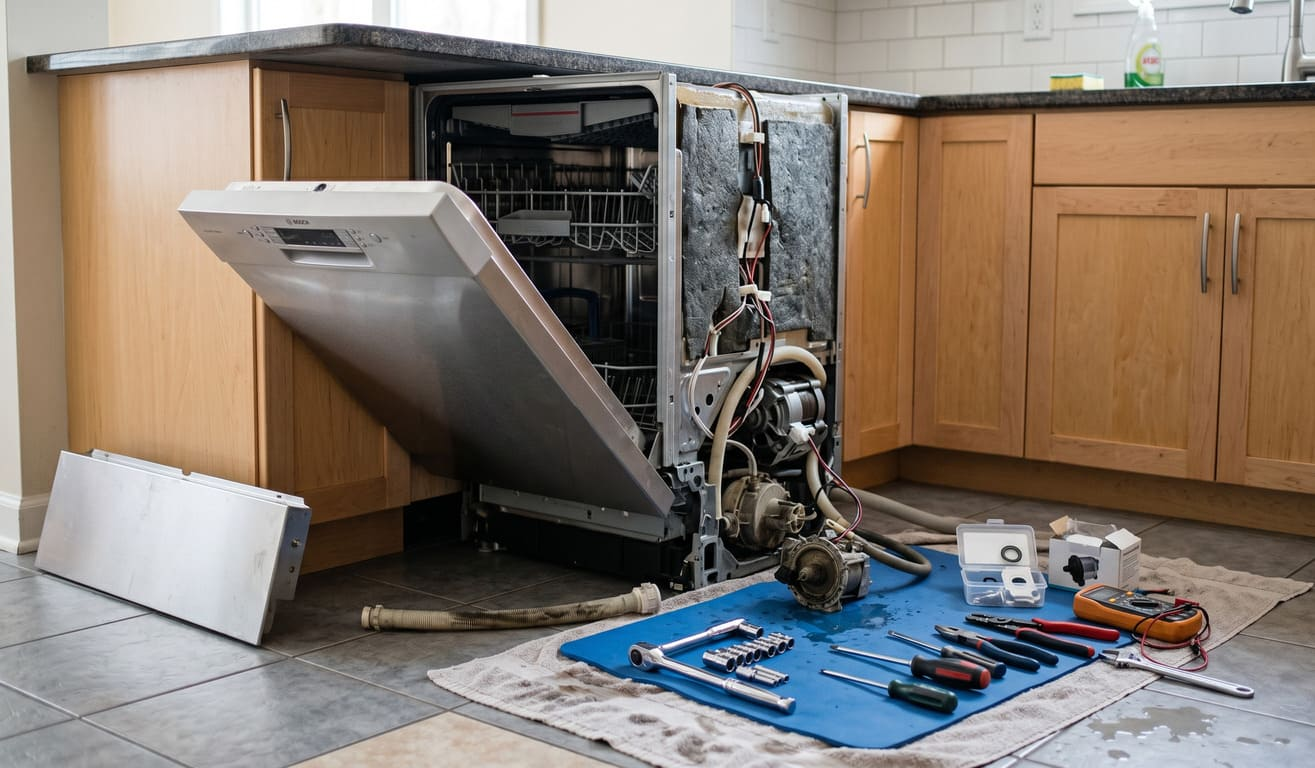
Few things disrupt the rhythm of a busy household quite like a broken dishwasher. One day, you are simply loading your plates and pressing a button; the next, you are staring at a puddle of water on your kitchen floor or opening the door to find dirty, soapy dishes. When this modern convenience fails, you are immediately faced with a stressful dilemma: should you pay for appliance repair, or is it time to head to the store and purchase a brand-new unit?
Making the right choice depends on a variety of factors, including the age of your machine, the brand, the cost of the parts, and your overall budget. Replacing a kitchen appliance is a significant investment, but continually paying to repair a dishwasher that is on its last legs can be just as much of a financial drain. In this comprehensive guide, we will break down exactly how to evaluate your current situation, understand the costs involved, and determine the most cost-effective and practical path forward.
Key Factors to Consider Before You Repair a Dishwasher
Before you start tearing your kitchen apart or browsing online catalogs for a new model, you need to assess the current state of your appliance. Here are the four most critical factors to consider.
1. The Age of the Appliance
The average lifespan of a modern dishwasher is typically between 9 and 12 years. If your machine is only two or three years old, it almost always makes sense to fix it. Often, newer models might even still be under a manufacturer’s warranty, which could cover the cost of parts and labor entirely. However, if your unit is approaching its tenth birthday, its internal components are likely experiencing significant wear and tear. Sinking money into a decade-old machine might only buy you a few more months before another essential part breaks down.
2. The 50% Rule
Appliance experts generally recommend following the “50% Rule.” This rule states that if the cost to repair dishwasher components is more than 50% of the price of purchasing a new one, you are better off replacing it. For example, if a new model costs $600 and the repair estimate is $350, replacement is the more sensible financial choice. When calculating the cost of a new unit, remember to factor in hidden expenses such as delivery fees, installation costs, and charges for hauling away your old machine.
3. Frequency of Breakdowns
Is this the first time your machine has malfunctioned, or are you on a first-name basis with your local repair technician? If you have had to service a dishwasher multiple times over the past year, it is a strong indicator that the appliance is reaching the end of its usable life. Continual breakdowns not only cost money but also cost you time and cause unnecessary frustration.
4. The Brand and Model Tier
The make of your dishwasher plays a massive role in the repair-versus-replace debate. High-end, luxury, and specialty appliances are built to last and have a much higher replacement cost, making repairs highly economical. For instance, if you own premium European appliances, seeking specialized Bertazzoni Repair or specialized Fisher & Paykel Repair for their unique dishdrawers is almost always the smarter financial move. The same applies to other luxury kitchen suites; investing in professional Sub Zero and Wolf Repair or JennAir Repair can keep your high-end appliances running flawlessly for decades. Conversely, even for dependable daily workhorses, a quick Maytag Repair is often highly cost-effective given the widespread availability and affordability of replacement parts.
Common Dishwasher Issues and Estimated Costs
To help you gauge whether your situation warrants a simple fix or a complete replacement, it is helpful to understand the most common problems and their associated costs. Keep in mind that these are estimates; exact prices will vary based on your location, the brand of your machine, and the specific parts required.
| Common Issue | Probable Cause | Estimated Repair Cost | DIY or Professional? |
| Failing to Drain | Clogged filter, broken drain pump, or blocked hose. | $100 – $250 | DIY (if filter) / Pro (if pump) |
| Leaking Water | Worn door seal, faulty water inlet valve, or cracked tub. | $50 – $200 | DIY (if seal) / Pro (if valve/tub) |
| Dishes Not Drying | Burnt-out heating element or faulty thermostat. | $150 – $300 | Professional |
| Will Not Start | Defective door latch, blown thermal fuse, or bad control board. | $100 – $400 | Professional |
| Loud Noises | Worn wash impeller, defective pump motor, or loose spray arm. | $150 – $350 | Professional |
When to Call an Appliance Service Company
While there are plenty of online tutorials that can teach you how to clean a filter or unclog a drain hose, not every problem should be tackled as a weekend DIY project. Modern dishwashers are complex machines that combine water and electricity—a potentially dangerous mix for an untrained homeowner.
You should reach out to an appliance service company when the issue involves electrical components, internal plumbing, or the main control board. A certified technician has the diagnostic tools necessary to pinpoint the exact cause of the malfunction, preventing you from wasting money on parts you do not actually need.
Finding a trusted local technician is also crucial for fast and reliable service. If you live in the Washington state area, relying on established regional experts ensures quick response times and local expertise. For example, scheduling APPLIANCE REPAIR IN SEATTLE or reaching out for dedicated Bellevue Appliance Repair Services guarantees that you are getting technicians familiar with the specific water profiles and household setups in the Pacific Northwest. Furthermore, professional major appliance repair often comes with a guarantee or warranty on the labor and parts, giving you peace of mind that the job was done correctly and safely.
The Environmental Impact of Repairing vs. Replacing
In today’s throwaway culture, it is easy to simply discard a broken item and buy a new one. However, e-waste is a growing global crisis. Large household items take up massive amounts of space in landfills, and the manufacturing process for a new machine consumes significant raw materials and energy.
Choosing to repair your existing machine is one of the most environmentally friendly decisions you can make. By extending the life of your current unit by even just three or four years, you are actively reducing your carbon footprint and helping to keep bulky metals and plastics out of local waste streams.
How to Maintain Your Dishwasher After Repair
If you decide that fixing your machine is the right way to go, you will want to protect your investment. Proper maintenance is the key to preventing future service calls and extending the overall lifespan of the unit.
- Clean the Filter Regularly: The most common cause of drainage issues is a clogged filter. Remove it once a month and rinse it thoroughly under hot water.
- Inspect the Spray Arms: Check the holes in the spinning spray arms for trapped food particles. Use a toothpick to clear away any debris so water can flow freely.
- Run Hot Water Before Starting: Before you start a cycle, run the hot water at your kitchen sink. This ensures that the machine starts its wash cycle with hot water, which dissolves detergent better and cleans dishes more effectively.
- Use the Right Detergent: Avoid using cheap or incorrect detergents, which can cause excessive sudsing and lead to leaks or residue buildup.
Deciding what to do with a broken appliance is never a fun process, but by weighing the costs, considering the age and brand of the unit, and consulting with local professionals when necessary, you can make an informed choice that saves you both money and stress.
Frequently Asked Questions
1. How long should a dishwasher last?
On average, a modern dishwasher is designed to last between 9 and 12 years. If you maintain it well by regularly cleaning the filters and using it correctly, you can sometimes extend its lifespan to 15 years. However, once it passes the 10-year mark, you are more likely to experience component failures.
2. Can I repair dishwasher leaks myself?
It depends entirely on the source of the leak. If water is escaping from the front of the machine, it might just be a worn-out rubber door gasket, which is cheap and easy to replace yourself. However, if the leak is coming from underneath the machine, it could be a faulty water inlet valve or a cracked pump, which usually requires a professional technician.
3. What is the 50% rule for appliances?
The 50% rule is a standard guideline used to determine if an appliance is worth fixing. It states that if the total cost of parts and labor for the repair exceeds 50% of the cost of buying a brand-new unit, you are financially better off replacing the appliance altogether.
4. How often should I service a dishwasher?
For routine maintenance, you should clean the internal filter and wipe down the door seals once a month. You should also run a cleaning cycle with a commercial cleaner or white vinegar every three to six months to remove hard water buildup. Professional servicing is generally only required when a specific component breaks or malfunctions.
5. Is it cheaper to repair or replace?
In the short term, repairing is almost always cheaper than buying a new appliance. A typical repair might cost $150 to $300, whereas a new standard unit can cost anywhere from $500 to $1,500. However, if the machine is very old and requires frequent fixes, the cumulative cost of repairs will eventually exceed the price of a new, more energy-efficient model